
How Schema Affects Ads in AI Search
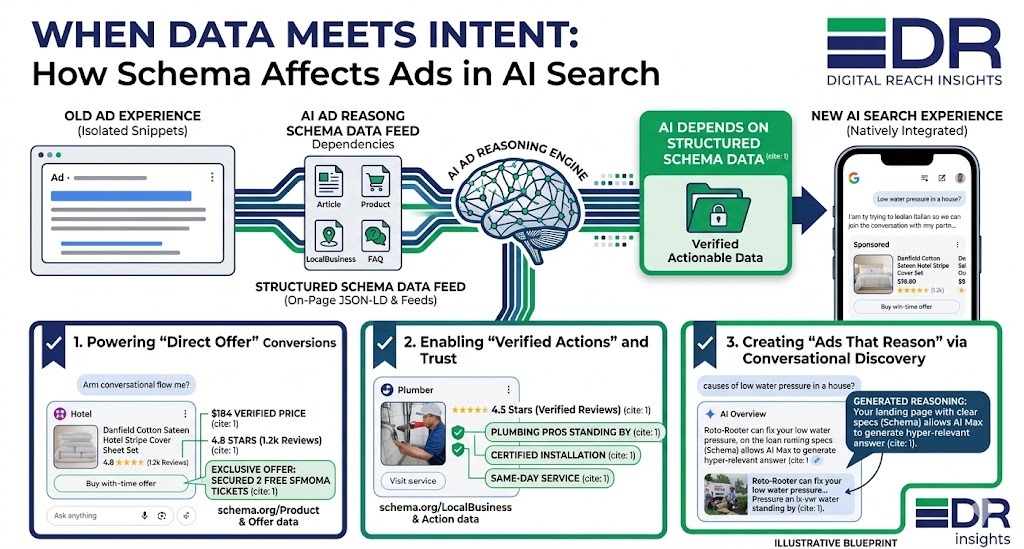
If you are a business using Shopping, Search (broad match), or Performance Max campaigns, this is crucial. In the new “AI Search Experiences,” ads are no longer isolated snippets. They are natively integrated inside the conversational response.
Google’s internal documentation confirms that to display these high-converting formats, the AI depends on your structured schema data.
Here is how optimizing your schema affects the ads potential clients see in AI Mode:
1. Powering “Direct Offer” Conversions
Instead of a simple “Buy Now” button, new ad pilots like Direct Offers (currently testing for retail and hotel verticals) inject personalized value directly into the AI response.
- How Schema Fuels It: When you provide deep, structured details on sale pricing, product ratings, or experiential add-ons (like “free breakfast” or “museum passes”), the AI pulls this verified data natively into its answer, closing the gap between discovery and decision.
2. Enabling “Verified Actions” and Trust
Ads in AI Search Experiences must be verifiable to gain user trust.
- How Schema Fuels It: Google relies on structured feeds and on-page schema to display instant transactional transparency—such as star ratings, real-time availability, fulfillment extensions, and shipping speed. This transforms static ads into trusted, interactive experiences.
3. Creating “Ads That Reason” via Conversational Discovery
The goal of AI Mode is conversational discovery—moving away from keywords to true intent matching.
- How Schema Fuels It: Systems like AI Max can use “keywordless targeting” to crawl your landing pages. If your schema clearly delineates your product highlights and specifications, Google can dynamically generate an ad explaining exactly why your product is the perfect answer to the user’s highly specific, long-form query.