
The AI Search Stack Explained
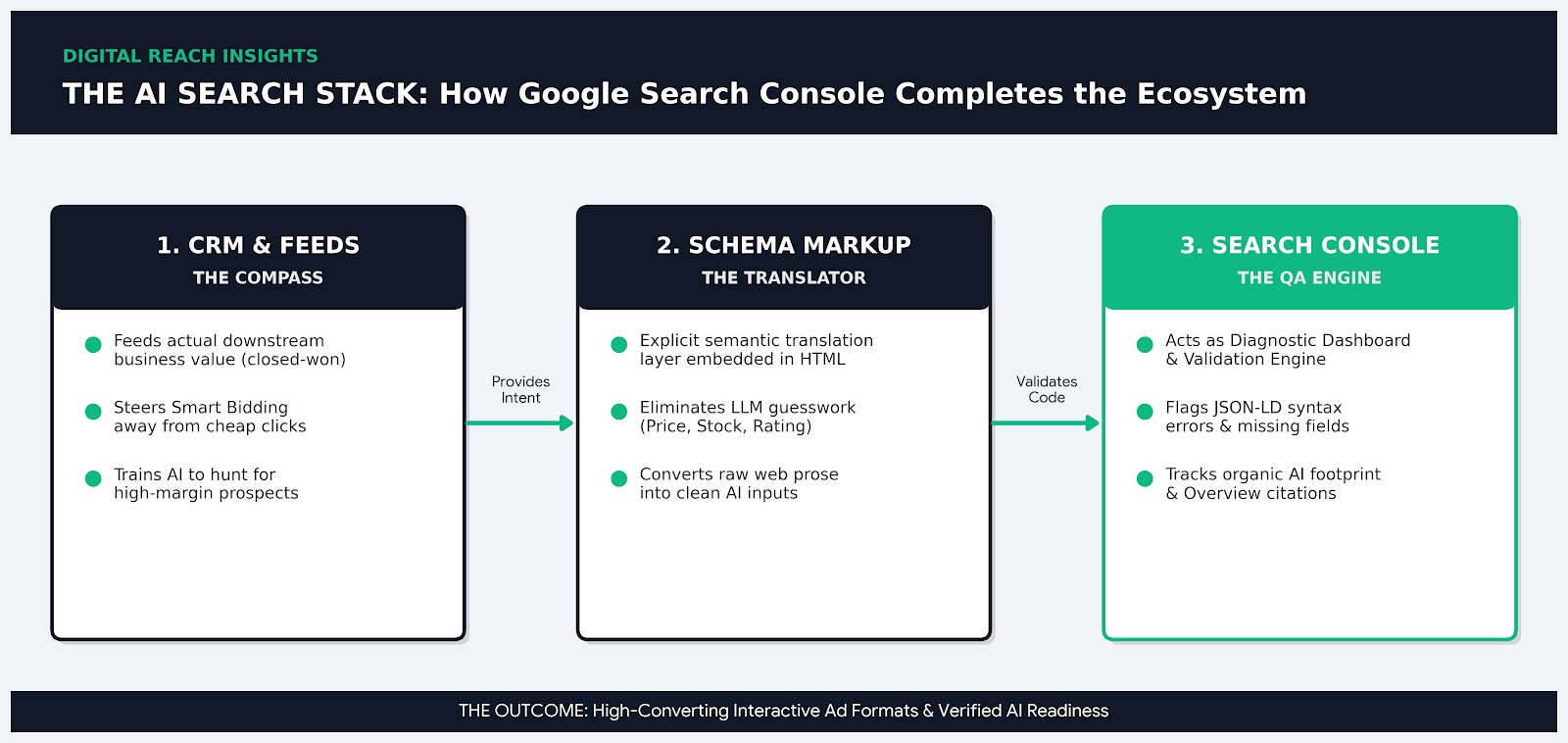
To successfully compete in AI-powered search environments (like AI Overviews and AI Mode), your technical architecture must function as a unified, three-step engine. Here is how the components connect:
1. CRM & Feeds (The Compass)
Your CRM integration acts as the compass for the entire system. Instead of feeding Google’s algorithms generic metrics like “clicks,” you use Data Manager to feed it actual closed-won revenue data. This steers Smart Bidding away from low-quality leads and trains the AI to hunt specifically for high-margin prospects.
2. Schema Markup (The Translator)
Once the AI knows who to look for, your website needs to explain exactly what you offer. Schema markup provides an explicit semantic translation layer embedded in your HTML. It eliminates Large Language Model (LLM) guesswork by converting raw prose into structured, clean data (like verified prices, inventory stock, and aggregate ratings).
3. Google Search Console (The QA Engine)
Google Search Console is the final, crucial step that validates the entire process. It acts as your diagnostic dashboard, ensuring that the “Translator” (your schema code) is flawless. It actively flags JSON-LD syntax errors so you can fix them before they disrupt your ads, and it tracks your organic footprint—allowing you to see exactly how many impressions and clicks your site generates from AI citations.*